

Mariolitas are small, stingless bees native to tropical America. They are among the most common species in Costa Rica and are completely harmless to humans.
They are excellent pollinators of native plants as well as agricultural crops. They also produce a very delicate honey with a slightly acidic, floral flavor. This honey is highly valued for its medicinal properties and its rarity, due to limited commercial production.
For the indigenous peoples of the region, mariolitas represented medicine, a source of livelihood, and a spiritual symbol. Their honey has traditionally been used for medicinal purposes.
Long before modern beekeeping, indigenous communities practiced the cultivation of stingless bees, known as meliponiculture. They placed nests in hollow tree trunks near their homes, protected the colonies from predators, and harvested the honey sustainably, as they had a deep understanding of the bees’ natural cycles.
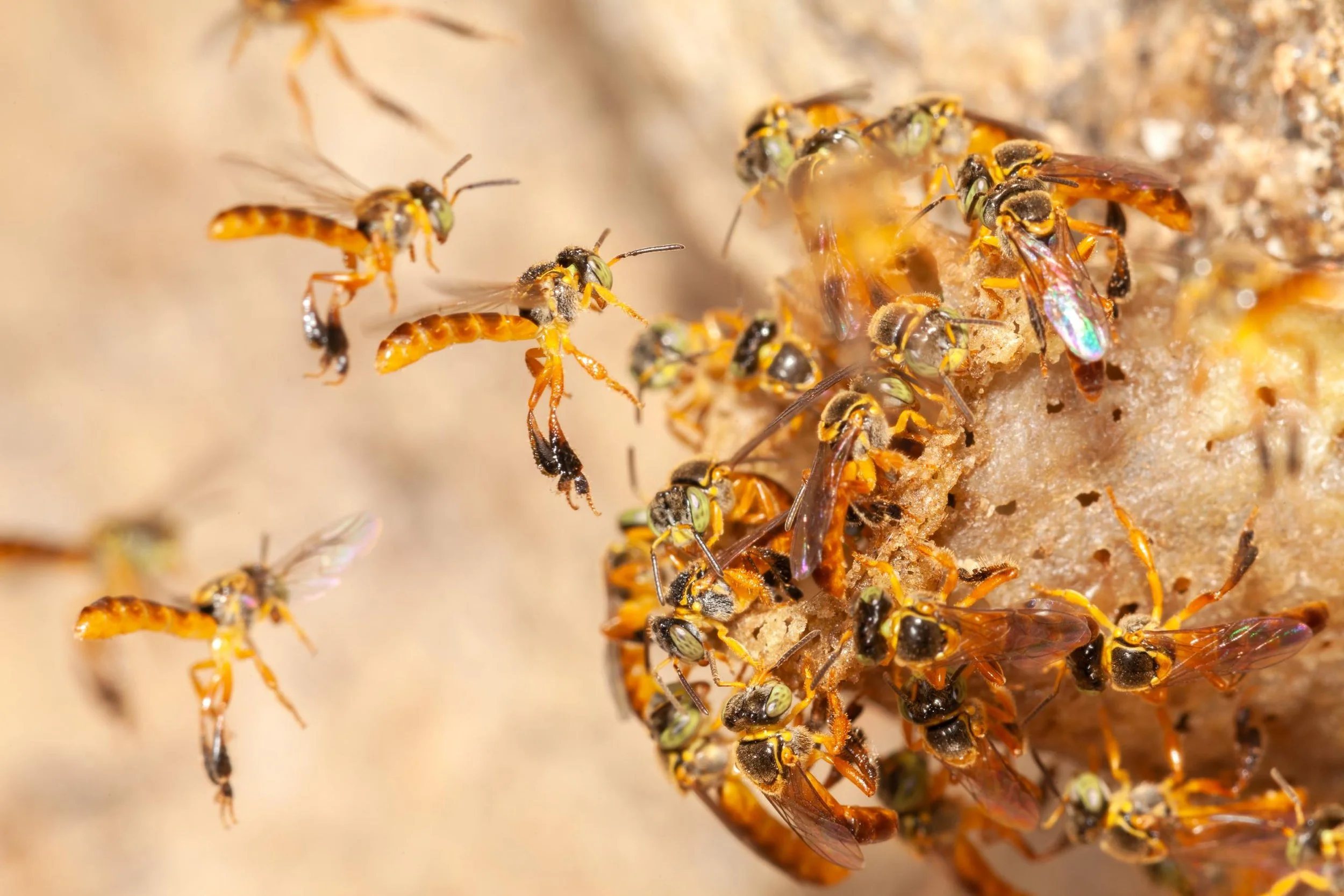
These small bees actively contribute to local biodiversity. Photo: Adobe Stock
In some Mesoamerican cultures, such as the Maya, stingless bees were considered sacred. They were associated with nature, fertility, and life. Their honey was used in rituals and offerings. There were even deities connected to bees, such as Ah Muzen Cab, the Mayan god of bees and honey, revered as the protector of honey gatherers and a symbol of abundance. His name means “the keeper of the honey.”
These bees reflected a way of life in balance with nature: they were not intensively exploited, their role as pollinators was respected, and they were seen as allies in an almost symbiotic relationship.
Properties of their honey
Antimicrobial and antibacterial: It has a strong ability to inhibit bacteria and fungi, due to its acidity, phenolic compounds, and natural enzymes.
Rich in antioxidants: It contains flavonoids and polyphenols that help combat oxidative stress and slow cellular aging.
Anti-inflammatory: Traditionally used to relieve irritations, mild infections, and inflammatory conditions.
Supports the immune system: Its bioactive composition can help strengthen the body’s natural defenses, especially when consumed regularly in small amounts.
Traditional medicinal use: In many Mesoamerican indigenous cultures, it is used to treat eye infections (highly diluted), respiratory issues (cough, sore throat), and for wound healing.
Digestive and potentially probiotic: Due to its natural fermentation (higher than regular honey), it may support gut microbiota.
Their importance as pollinators
Due to various factors, the global population of pollinating insects has declined, affecting both agricultural production and biodiversity. Mariolitas are excellent pollinators: they are highly active and, unlike honeybees (Apis), can work even in light rain. They are also well adapted to hot and humid climates.
As generalist pollinators, they can pollinate a wide variety of plant species. Their small size and light weight allow them to access and pollinate very small flowers.
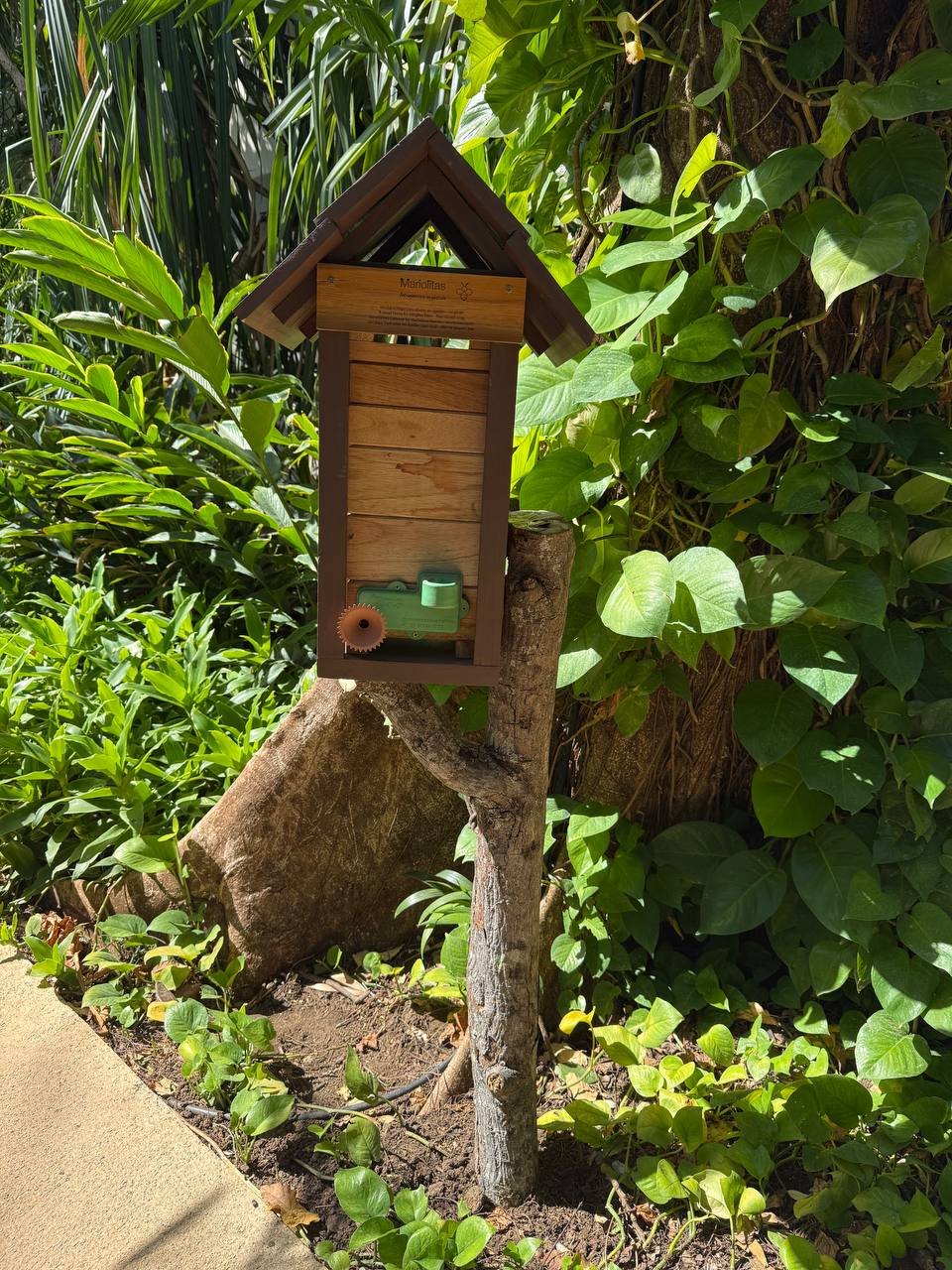
Mariolitas house in our garden – a space dedicated to stingless bees. Photo: Hotel Capitán Suizo
In our garden, mariolitas pollinate the flowers of Guanacaste trees, pochote, papaya, piper species, starfruit trees, and many other native plants.
From: Helen Soto, Manager
May 28, 2026